
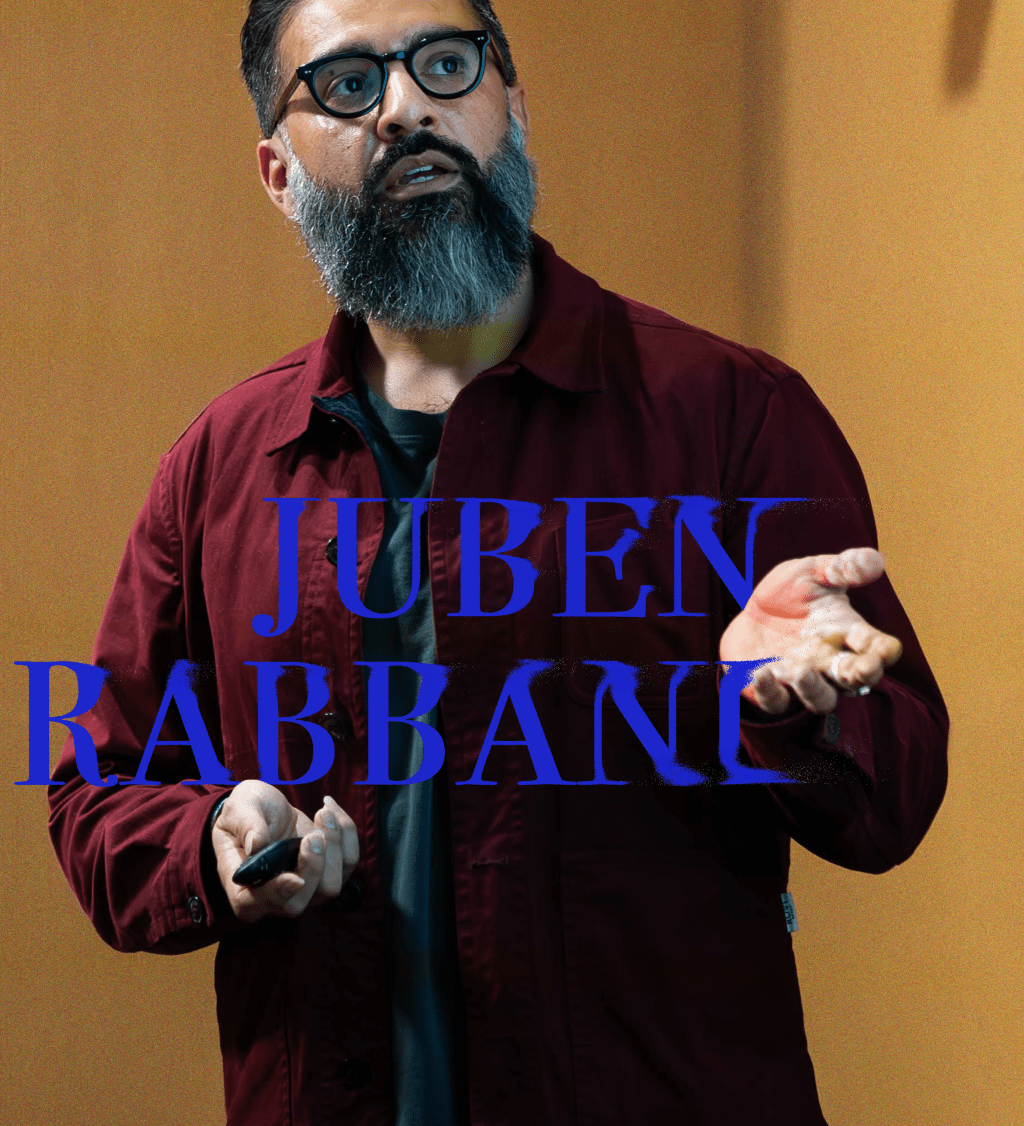
In March, an exhibition opened in Brown University’s Watson School of International and Public Affairs as part of the school’s “Art at Watson” initiative: The Future Was Already Buried Here: Making and Unmaking Futures in California’s Lithium Valley. This show, spanning digital, pinhole, and film photography, represents the work of Juben Rabbani. A Watson Ph.D fellow from Brown’s Department of Anthropology, Rabbani completed this project as an extension of his Master’s research on the impacts of Electric Vehicle (EV) development on the Salton Sea region of Southern California.
In recent years, the Salton Sea has garnered significant attention and investment from the EV Industry. This corporate interest comes from the major geothermal brine, rich in lithium, resting in aquifers directly under the Sea’s lake bed. Promising enough lithium to equip 375 million EVs, this discovery has garnered the area a new moniker: “Lithium Valley”. Having grown up in Southern California, Rabbani’s interest in the Salton Sea is framed by his academic background in Social-Cultural Anthropology and his decade-long career in the auto industry. Rabbani’s research interrogates the densely-layered socio-environmental history of this region in order to understand the cycles of power at play and the ways they impact this landscape. Photography enriches Rabbani’s research, offering a lens through which to critique historic “investment” in this region and the futures promised by dominant powers.
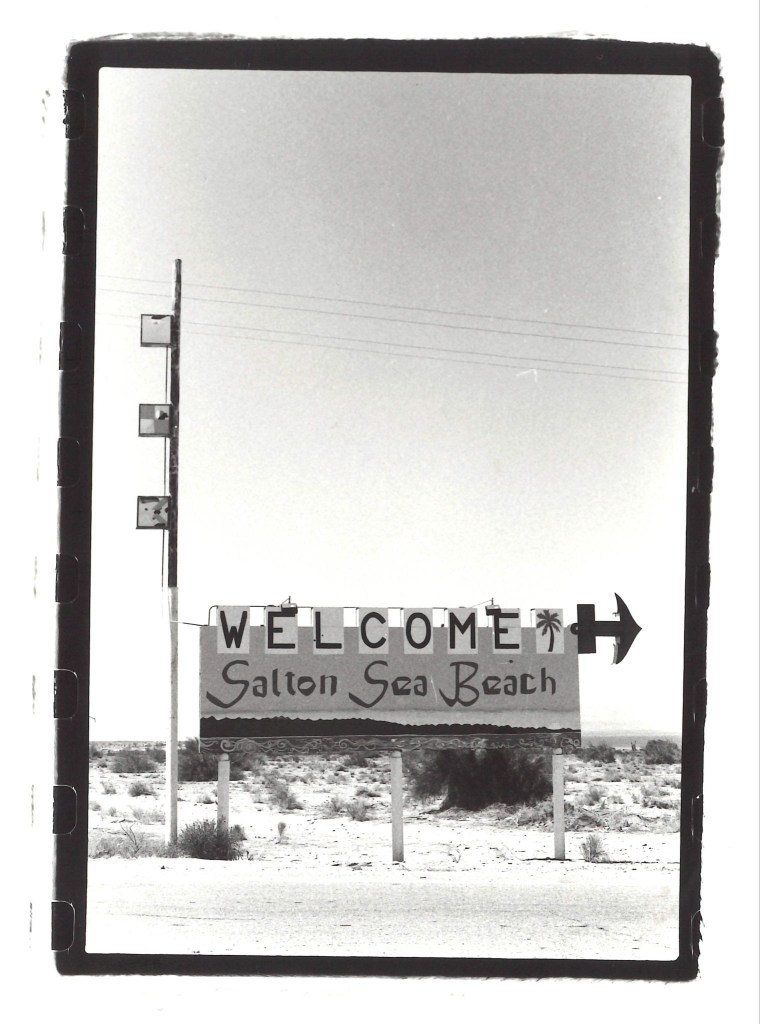
“Welcome to Salton Sea Beach” sign, hand-printed 33mm, scanned. 2025.
A brief history of the “Salton Sea”:
The EV industry’s interest in mining the Salton Sea promises only the most recent disruption in a long lineage of environmental transformation. Prior to a modern “Salton Sea,” this landscape was always a site in-flux. Going back thousands of years, the Colorado river would flood the sea’s basin in year of intense rain, forming a transient body of water now known as Lake Cahuilla. The indigenous Cahuilla, CoCoPah, Pai Pai, and Kumeyaay nations developed complex and nuanced agricultural, trade, and migration patterns in response to the shifting, oftentimes unexpected cycle of inundation and drought which characterized this region. Stewardship of indigenous crops, inter-tribal trade, the use of deep-water aquifers sustained these populations.
In the late 16th century, Spanish incursion northward started a cycle of colonial control and transformation of the social and natural landscape of this region. Six decades of Spanish Colonial rule were followed by Mexican governmental control, which lasted until 1848, when the Mexican-American War absorbed this “territory” into the United States settler-colonial nation. Each period in this revolving door of foreign power imposed unique assaults on indigenous sovereignty. As prospectors sought development, settlement, agricultural, and industrial opportunities, they imposed upon native nations hardships including labor exploitation, disease, murder by militia, starvation, conversion, forced separation of families, in addition to the physical uprooting of indigenous agricultural practices (“The Settler Sea” p.40-53).
1877 saw the first railroad cut across the Colorado Desert, by 1900 oil rigs were sunk into Cahuilla and Kumeyaay land, oil companies privatized access to aquifers, and ultimately, the US-Government dubbed the Cahuilla River Basin the “Imperial Valley” as it sold off tracts to US-American Settlers (“The Settler Sea” p.65-71). In this period, the broader South East was transformed through major US-American irrigation projects which promised to transform previously arid landscapes into agriculturally-viable areas for settlement. The redirection of the Colorado River was part of this nation-building project. Ultimately, echoing its geologic propensity to flood, the river breached its canals in 1905, once again flooding the “Imperial Valley” and forming what is now known as the “Salton Sea”. Though this “Sea” saw a heavy influx of mineral and chemical runoff from adjacent agriculture, it was heavily marketed as a tourist attraction through the mid-20th century. Indigenous peoples could have predicted that this new lake, like those previous, would inevitably begin to evaporate. As the Salton Sea shrunk through the rest of the 20th century, and a wave of economic abandonment followed. As more affluent visitors fled, its water became more and more chemically-concentrated and it saw increased algal blooms resulting in fish and bird die-offs. The remaining population, now largely low-income and people of color, face health impacts as winds in the basin blow toxic deposits up from the now-exposed sea-bed (Juben Rabbani 13:00-20:00).
. . . .
The above history –only a summary of a highly complex narrative of power and development– is critical to Rabbani’s research because of his interest in temporality and time scales. As billions are invested by the automotive industry into this “Lithium Valley,” it invites new and unknown environmental exposures to the regions existing population. As developers assert that this transition represents a critical battle against climate change, Juben asks us to consider how this framing might cause damage. What time scales dominate others, and who ultimately benefits from EVs? To answer these questions, Juben’s use of photography interrogates the overlapping – in some cases conflicting – temporalities of this site. 22 framed film images in black and white and a seven day long-exposure photograph speak to the slower, natural cycles at play including geographic, environmental, and embodied time. In parallel, a looping video of approximately 500 digital photos in color reflects a rapid, capitalist, progressivist framing of time at odds with the first. The Future Was Already Buried Here asks us to consider a key question: “How is time framed, and how does this framing impact the worlds we inhabit?” Understanding this site’s layered history complicates any solutionist answers to the Salton Sea’s environmental challenges.
I’d previously taken an environmental anthropology course with Juben, and when I heard about this exhibition I knew I wanted to discuss it. Beyond talking about the show, our conversation spanned Juben’s professional background in the EV industry, the pathway towards his current research, his conception of time through an anthropologist’s lens, pottery, photography, and “the archive”.
The following conversation has been edited for flow, length, and clarity.

Charlie Usadi – I’d love to begin by discussing your background. This exhibition sits at this fascinating intersection between your professional and academic experience. Could you describe your professional pathway and how it primed you for your more recent academic and artistic endeavor?
Juben Rabbani – Yeah, something I described during my presentation at the opening of this exhibition is time. I think that the way the discipline of anthropology thinks about time is applicable to my personal pathway, that the present is always mediated by the past and the future. It’s almost funny to look at the past decisions and moments which led me here, which guided my current present, because I’m not a “car person,” I’m not into cars. I studied Social-Cultural Anthropology in Chicago, and after graduate school planned to continue my studies, I had already been accepted into a few Ph.D. programs, but a series of losses in my family brought me back home to California for a period, which ultimately led me to working with JD Power. JD Power is the “industry standard” for the automotive industry in terms of customer care, customer response, customer quality. They got their start back around 1960, when the founder, John David Power had the idea to develop surveys asking consumers what they liked and didn’t like about their new cars. They sent out hundreds of these surveys, asking people to mail them back, and amassed this wealth of data concerning a swath of auto makers, which he ultimately sold back to these companies. Today, JD Power is a powerhouse of data analysis, consulting, consumer behavior etc etc.
Ultimately, my role with JD Power focused on the two Korean Brands which the company advises, Hyundai and KIA. In my 10 years with JD Power, Hyundai established their luxury brand, Genesis, and their EV arm, Ioniq in Korea. My role involved the introduction of these brands to the United States. From 2014-2024, I was involved in the development of every model of those brands on US roads in various ways.
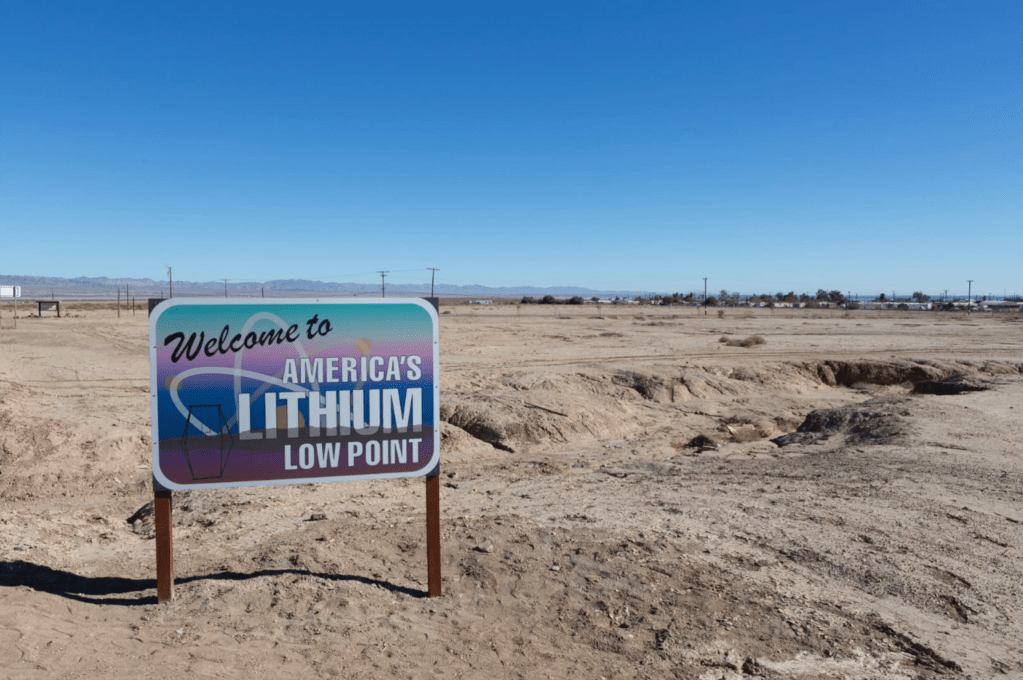
Selected image from “Salton Sea – Digital Visual Ethnography”. Digital photo, 2025.
So you end up in this industry-adjacent role for about a decade, but you have this academic background in sociology, anthropology. At what point do you decide to return to school?
In 2021 I began teaching at the university level parallel to my work with JD Power. In the wake of the Black Lives Matter movement in 2020, California mandated ethnic studies for all college students, creating a massive faculty shortage in ethnic studies departments state-wide. So I began lecturing in Ethnic Studies at CSU Fullerton; I was able to publish a paper, attend conferences, and teach 13 classes. Specifically, I was tasked with teaching the histories of Indigenous, Black, Mexican, and Asian people in America, marginalized demographics which also represented the students I was teaching. I’m able to develop this explicit social justice, equity-oriented pedagogy, largely based around the writing of Paulo Freire and bell hooks. This opportunity to teach offered me the perfect transitional role to get me back into academia.
Do you think that developing this critical pedagogy in the classroom impacted your understanding of the EV industry?
My teaching experience definitely led to a more critical consideration of EVs. I developed this strong sense of what justice looks like through my teaching, and as I continued working in EV development, I’m hearing this informal chatter by decision-makers, “EVs don’t work.” This role was bringing me to these highly regulated corporate campuses with intense security systems to prevent corporate espionage, but there were always in-between moments where fascinating, subversive conversation was possible. Maybe you’re five minutes early to a meeting, waiting in line for lunch with the 500-odd employees at a site, or driving between sessions in secured buildings. These windows of opportunity allowed me to hear these unexpectedly powerful, generative perspectives from industry professionals which would never be expressed publicly in a formal professional setting. These industry professionals are pretty much saying “never mind the human rights issues of extractivism, the entire grid is run on fossil fuels. When you get your electricity, where do you think it’s coming from? Fossil fuels.” Production remains wholly fossil-fuel dependent.
In the southern portion of Korea, for example, there’s a port called Ulsan, it’s one of the largest ports in the world. Hyundai has this massive infrastructure of shipping, and they’ve built one of their largest factories directly in this port. Cars are churned out on six car lines, and they drive directly onto massive boats which ship globally. I bring this up because every moment of the process – refining materials, building the car, moving parts, shipping the cars across the world, trucking cars to dealerships. Even as so many experts outwardly paint EVs as this silver bullet solution to climate change, the industry is largely supported by fossil fuels. Not to mention, EVs have anywhere from 6-9 times more metals in them than fossil fuel cars do –copper, magnets, lithium, etc– just imagine how much more energy goes into the extraction, refinement, and transport of these metals. Smelting, fortifying, and refining these metals for production is highly energy intensive.
I’m hearing these critical perspectives increasingly from within the industry, and in parallel I’m teaching undergraduates what a social justice pedagogy looks like. So as I begin considering Ph.D programs and what the research could look like, the universe seems to be pointing me to the intersection between these two worlds, EVs and social justice.
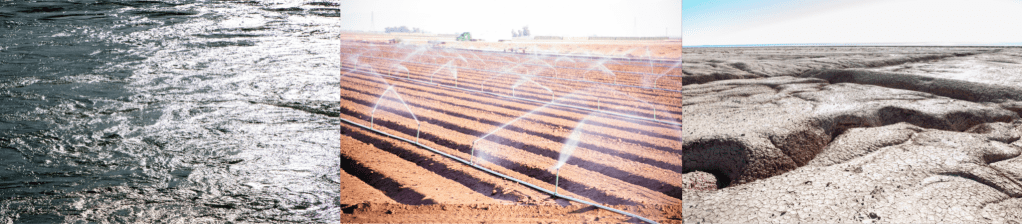
Selected image from “Salton Sea – Digital Visual Ethnography”. Digital photos, 2025.
As I looked into schools which could support environmental anthropology research I discovered Myles Lennon, who was already using this critical, social-justice oriented approach towards the solar panel industry. His framework for understanding the nuanced impacts of alternative energy beyond “offsetting fossil fuels” is rooted in intersectional black, queer, feminist studies, representing an explicitly social-justice informed methodology that I’m interested in working through. When I reached out to Lennon I already knew I wanted to look into the social impacts of lithium extraction, and I laid out to him the potential sites where my research might unfold. Prior to my actually joining the program, Myles reached out to me asking if I’d co-author a paper with him, effectively “an environmental anthropology of supply chains,” which has provided me with the conceptual framework for my ongoing research.
In terms of researching EV production, you could trace negative environmental impacts to any of the many steps of production: mining, mineral processing, fabrication, shipping. In approaching such a complex system, why did you end up focusing on mineral extraction, and why situate your research on the Salton Sea?
The whole EV industry is a supply chain, right? It’s a very complex process, but the process of producing a vehicle is often simplified to a three-stage process, tiers one, two, and three. A tier three supplier takes the raw material and makes it into a component part (i.e. magnets), a tier two supplier takes that component and situates it within a larger system (i.e. a breaking system), and the tier one supplier takes that system and installs it into the final vehicle. Component. system. Vehicle. – That’s the auto supply chain, put simply. But of course, so much happens to get those initial raw materials. What happens before tier three? The mining supply chain.
Mining is highly complex in its own right, it has its own tiers, varies globally, and works at a different timescale than the auto supply chain. I was interested in interrogating this sphere of the auto industry, so often overlooked in the framing of the traditional three-tier process, because it’s in this mining supply chain that so many human rights abuses take place. Part of the reason why is because the three-tier auto chain largely works within so-called “developed” countries. In the US, for example, these three tiers are mostly unionized, protecting workers in this industry, whereas the mining supply chain often lacks those protections. That’s why I’m interested in mining, it’s in some ways the starting point of this economy, yet it’s so often underregulated, underunionized, and it’s where you see so much exploitation occur. The traditional three-tier system elides or naturalizes the existence of mining entirely.
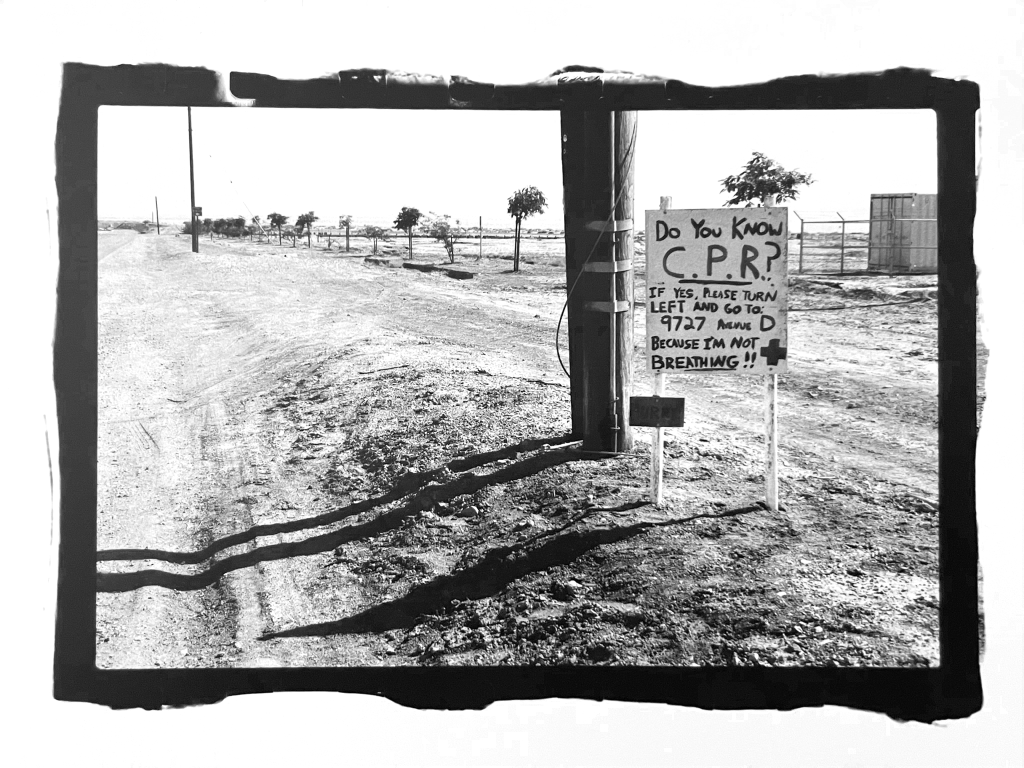
Photo 10 from The Future Was Already Buried Here, “I’M NOT BREATHING !!“, hand-printed 33mm, scanned. 2025.
Prior to officially pursuing my Ph.D. I’d already developed that paper with Lennon which provided a blueprint for my dissertation. In the paper, we describe what we call the “EV ecosystem,” which expands the automotive supply chain to include the mining supply chain, creating a more complex, challenging network of environmental risk and exploitation when you see them interlock. It’s a classic anthropology methodology, associated with Anna Tsing, this idea of “following the thing,” or “following the commodity,” to its source and seeing how power relations are structured around it.
So as you commit to critically examining mining as a foundation of the EV industry, when did you become aware of the Salton Sea?
Like all projects it’s definitely evolved. I had to choose a raw material to interrogate before I could know where my research might unfold. There are many elements critical to EVs, of course, but many of them have already been heavily researched. I didn’t feel I had anything to say about cobalt, for example, which hadn’t already been said. Surprisingly, there seemed to be a blind spot surrounding lithium, and through these informal conversations I was having, it became clear to me that lithium was key. I began researching this element, looking into its global distribution, which then allowed me to narrow the geographic options for my research, too. I learned that there are two types of lithium, brine or ore. Other sites known for lithium brine, such as the Atacama Desert, or West Africa, already have well known histories of indigenous resistance to corporate reorganization of the government, but the time I was planning to come back to school, a major lithium reserve was discovered in the Thacker Pass region, north of the Salton Sea, which isn’t far from where I grew up. Thacker pass began to be developed, meeting resistance from the indigenous population there, so I started paying attention to this region. Research into Thacker Pass introduced me to the Salton Sea’s lithium potential.
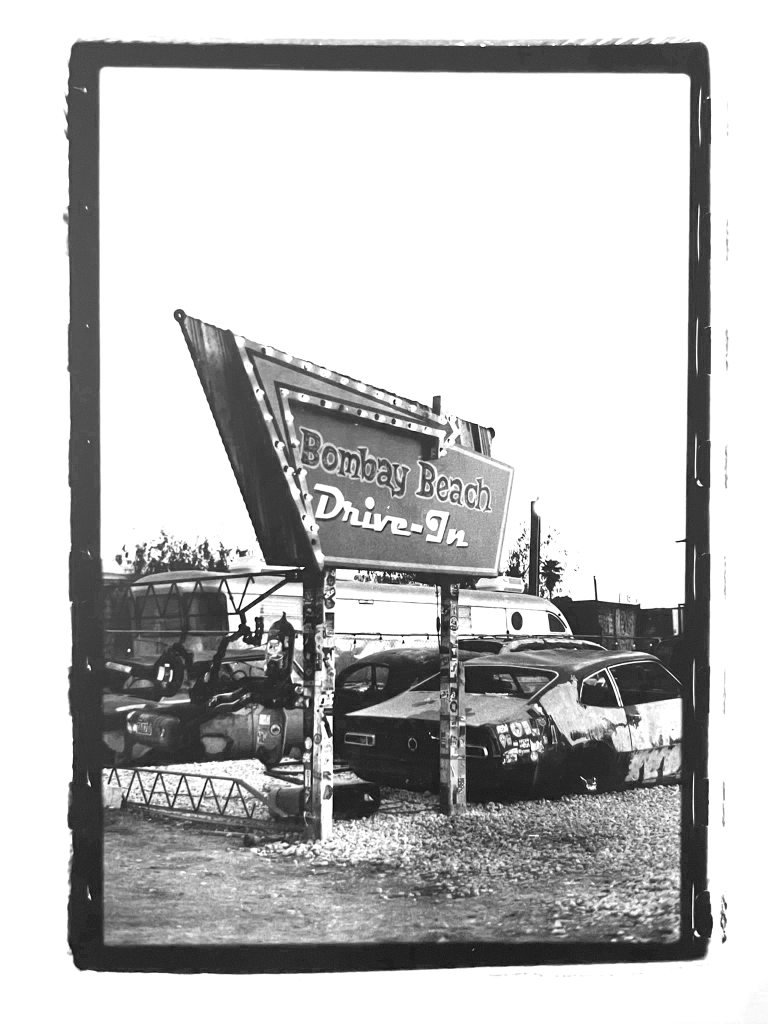
Photo 14 from The Future Was Already Buried Here, “Bombay Beach Drive-In“, hand-printed 33mm, scanned. 2025.
As you approach Lithium extraction in this region, I’m interested in how you conceptualize time, timescales, timelines. The idea that time is something which is consciously framed by different players in an ecosystem feels like a key concept which has influenced your work. I’d love for you to talk about time and the Salton Sea.
Yeah, electric vehicles are framed as a “solution to climate change”. There’s this point of no return we’ll hit in terms of emissions, global warming. This “climate change” framework is a dominant timescale, and the technocratic solution most-often offered is the development and implementation of a new technology: EV’s, solar, wind energy, etc. But the logic underpinning this narrative of “climate change vs EV” solutionism is a neoliberal one. There’s this presumed progressivist linearity contextualizing this solution. Progressivism is framed around a concept of time as linear: the enlightenment leads to early industrialization leads to heavy industrialization, leads to climate change etc etc. There’s an inevitability to this conception of progress in which only continued technologic advancement offers a solution–the only way out is forward and the future is now. It’s tied closely to neoliberal ideals of productivity, the free market, Fordism, the 9-5 job, all of which dominate our understanding of time itself as point a-to-b. At its core, it’s a capitalist monopoly on time.
But, of course, there are other alternative timescales being subverted by this dominance. Even just at the site of the Salton Sea many timescales are elided and overlooked by this progress-dominated timeline. For one, capital time only exists because of geologic time. It takes an almost incomprehensible amount of time for fossil fuels to develop, as it does for lithium and all of the materials mined for production. There’s toxicity-time, which manifests in the body at a biological/corporeal timescale as individuals are exposed in different conditions. There’s a historical timeline of coloniality which still structures the everyday lives of the Cahuilla Indian population, the Torres Martinez Cahuillas are those mostly impacted by this development, and prior to American Settler colonialism they experienced Mexican colonialism and Spanish colonialism – three forms of coloniality continue to have impacts on this population’s political agency. Despite these alternative ways of understanding current-day conditions, this domineering productivist timeline pushes business solutions to natural issues, namely Lithium extraction for the development of EVs.
Photography as a medium lends itself to these unique timescales. Analog photography, for example, takes time to shoot, develop, process, which lends itself well to the slower timescales of geologic and biological time. Digital photography is rapid, immediate, lending itself to the more modernist, neoliberal ideas of rapidity and quick decision-making. Engaging with these photographic technologies offers compelling metaphors for the timescales at play.
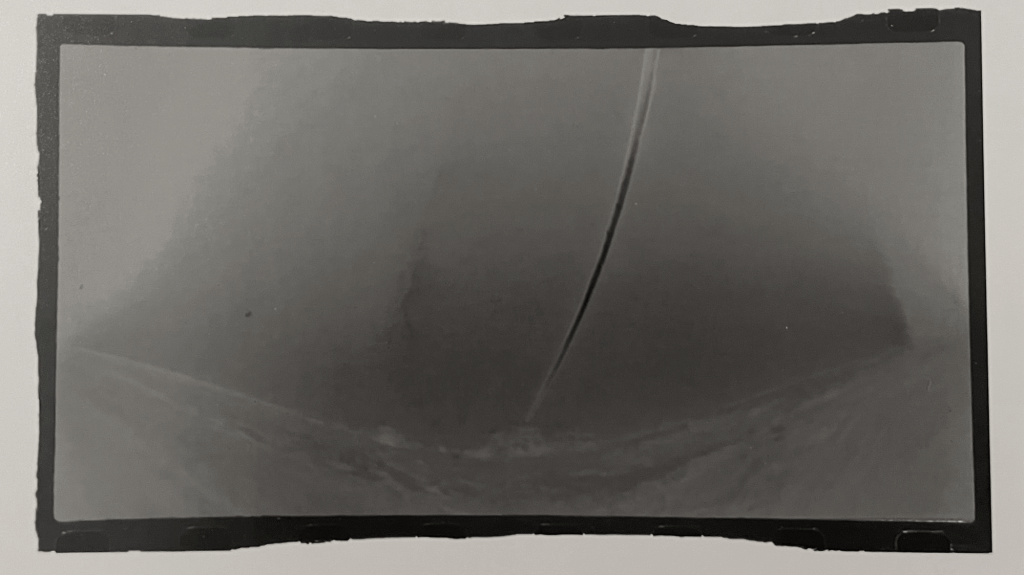
Photo 19 from The Future Was Already Buried Here, 7-day long exposure, scanned. 2025.
I’d love to talk about the traditional methodology of an anthropologist. Very clearly this project has been a process of expanding the scope of anthropology and the traditional methodology associated. What does anthropology work look like, and where did your process of exploring the Salton Sea begin?
Anthropology as a field is a legacy of colonialism, which historically has four branches: linguistic anthropology, archaeology, social-cultural anthropology, and biological anthropology. When I was in undergrad, anthropology was still this four-field discipline, but bioanthropology (largely concerned with evolution) has since separated from the discipline and been absorbed by paleontology or biology. My interpretation of sociocultural anthropology is that at its foundation it tried to understand how humans make sense of their world through their cultures. Culture is a primary organizing principle for people, reality is mediated by culture. How does culture shape consciousness, sense of self, systems of power? As sociocultural anthropologists, our way of answering this question is through ethnographic inquiry. Ethnography is a long-term, embedded process of understanding cultures by situating yourself within a given community, trying to understand it as well as possible. We listen to people, interview people, it’s an intimately rooted discipline. If you imagine a lawn, a sociologist will look at one patch of grass and compare it to another, an economist will ask how to grow the lawn most cost effectively, a political economist will look at the underlying power structures allowing the grass to grow in the first place, whereas an anthropologist will sit with one blade of grass and tell you anything you’d want to know about that single piece. It’s a hyper local approach to understand broader issues. Not to suggest that there’s always a continuity between global-local structures of power, but it’s a useful entry point for fuller understanding. The approach has always resonated with me. I’m a multiracial person with immigrant parents, so in many ways I’m always straddling different societies, languages, and value systems. I find the discipline very generative in many ways in terms of understanding perspectives diverging from our own.
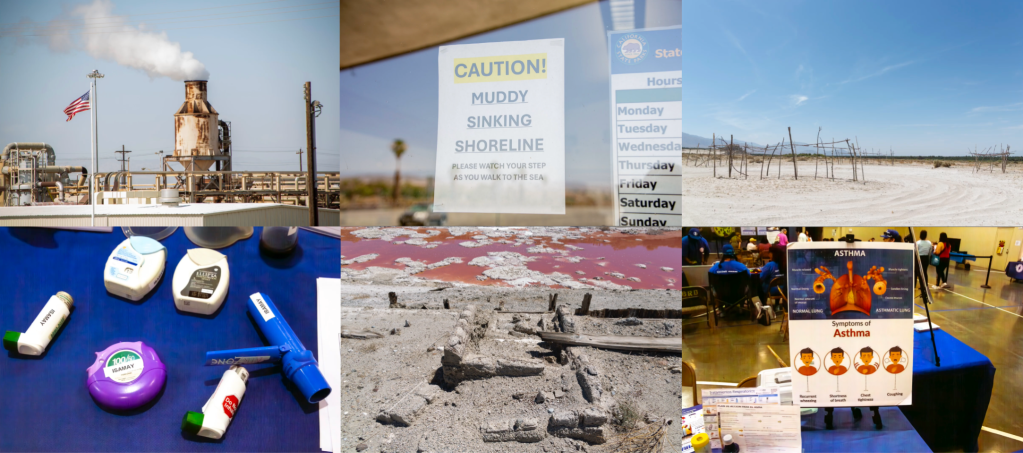
Selected images from “Salton Sea – Digital Visual Ethnography”. Digital photos, 2025.
In terms of approaching “the field” as an anthropologist, what do traditional approaches look like, and how do you see photography serving as an anthropologist’s tool?
Yeah, I grapple with this question of photography. The concept of the “field” is highly contentious to begin with. It’s something we talk about all the time in the discipline of anthropology. In many ways, what I’ve documented through this project might not even be relevant anymore. It’s a snapshot of summer 2025 in this region, it can never represent the field truthfully as it continues to exist. Just because I’ve left doesn’t mean the field stops shifting. Moreover, in a way the field comes with me when I leave, my reflections of this experience continue evolving, changing. The documentation, data, and conversations I’ve had also don’t get processed on-site, rather, so much of the piecing together happens after the fact, connections are made once I’ve left. After time away from this region, once I think I might have a foundational understanding of it, upon my return I realize it’s continued to change in profound ways. There’s constant, subtle change, which is to be expected in any complex context. It’s called “field” work because the site is so central to anthropology. You can’t be an anthropologist without having a field, but there’s this central challenge to accurately capturing something as dynamic as a “field” whether it’s through conversations, data, photography.
You’ve touched on a concept I’m fascinated in, a challenging and sometimes problematic quality of the medium of photography, this idea that it can “freeze time”. There might be an assumption that photographs represent a form of truth, but as you’ve so effectively described, capturing a singular moment in so many ways misses the complex, active nature of these areas you document.
There’s also a distinct historical connection between photography and anthropology. It’s a very colonial practice of documentation, which was seen as a measured, scientific approach to apprehending the world as it emerged. Impressionism is often considered a direct response to the rise of technology, leaning into romantic subjectivity instead of the perceived sterility of photography. But of course, photography has this gnarly, violent history tied to colonialism – mugshots, for example. What does a mugshot do for society by labeling individuals as dangerous? It begins visually associating certain demographics with violence.
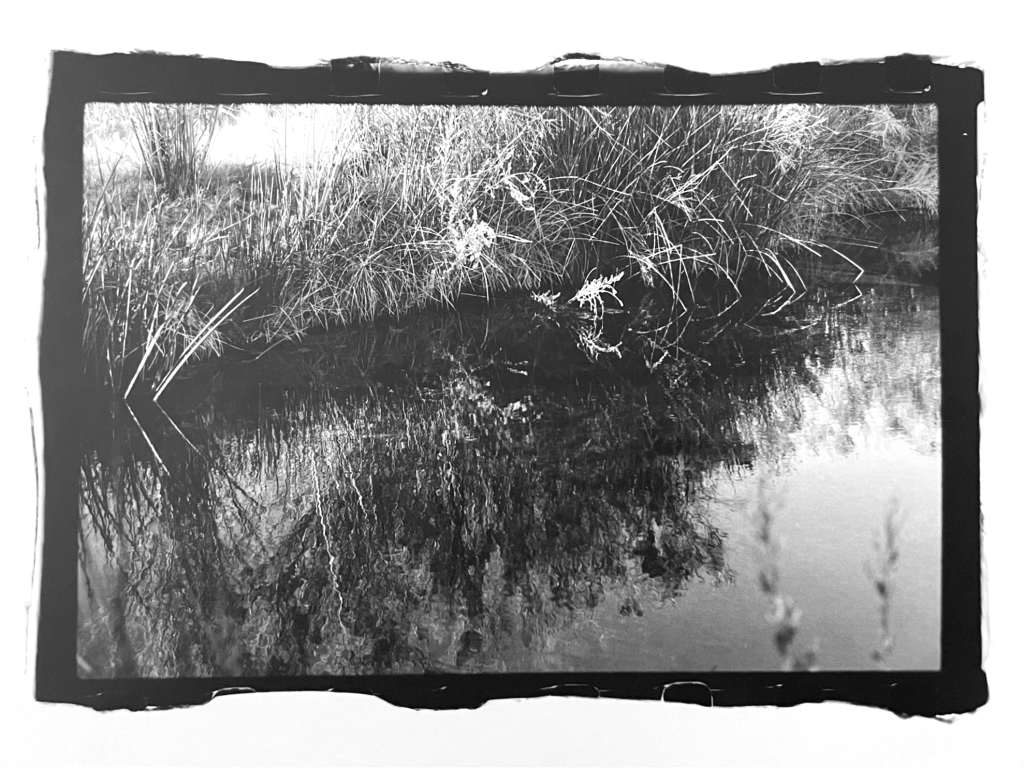
Photo 15 from The Future Was Already Buried Here, “Ash Meadows Oasis“, hand-printed 33mm, scanned. 2025.
Especially in terms of the landscape you’re working in, I found myself considering the US history of photographing “the West,” and, more specifically, photographing indigenous peoples in America in very pointed ways in line with the US’s settler-colonial expansion. You seem well aware of the dangers associated with photography, their potential to cause harm, and the ways they’ve done so in the past. Why, then, are you still interested in this medium’s potential to enrich your research?
I think the most direct way I’ve worked through this challenge of photography’s role in my work is that I realized that writing wasn’t enough. To apprehend the intricate threads of toxicity which are bundled, knotted up in this ecosystem, writing doesn’t suffice. I think of my audience, and for the most part, the community members in the Salton Sea region whom I’ve worked with won’t ever read my papers. These people are more concerned with their lives than they are in sifting through my dense, academic writing. So much academic work is written purely for other academics, for ourselves as anthropologists. Knowing the photographic approach’s problematic history, I also know that the medium is more readily accessible than writing can be. It’s immediately resonant in a way which writing can’t be, it’s not limited to a specific language. While how you see is structured through your culture, images don’t require the translation necessitated by writing.
Digging into this idea of translation I think it’s important to note that translation might even be necessary within a language. Many of your interlocutors may very well speak English, but the “language” of an anthropologist is still something inaccessible to many.
That’s exactly what I’m getting at. Beyond the field broadly requiring more accessible entrypoints, the Salton Sea in particular demands more than just writing to document. As I work I ask myself what other ways there are to capture this complexity beyond the written form. Photography felt like a medium uniquely well suited to challenging the perceived linearity of time, of progress. Using photography as a way to apprehend the different timescales observed on this site not only grapples with the Salton Sea’s complexity, but also broadens the audience who can access the work. I figured I could subvert some of the coloniality ingrained in photography by resisting the progressivist narratives of technocratic solutionism which are so closely tied to neoliberalism. It’s not to say I think photography is a comprehensive solution, I have future projects in the works which are moving towards more material assemblages, and I’m interested in community co-development of work, which wouldn’t be so single-authored. This photographic work is a first iteration, an experiment in integrating experimental methods and approaches to academic storytelling. There’s academic requirements, coupled with the desire to create something accessible.
I think that a strength of this project is your engagement with diverse, parallel photographic processes: digital, film, long-exposure. It seems to reflect your desire to resist one narrative as you document this site. I’m compelled by the fact that a number of the photographic processes you use are chemical themselves, the process of capturing an image is tangible, physical, which speaks directly to the chemical concerns central to your environmental research.
Yeah, as I consider how photography can capture this environment I discovered a research paper where they realized that the metals in photo paper can capture hydrogen sulfide, H₂S. H₂S is corrosive, so a sociologist has developed a technique where you can capture this chemical’s impact on a photograph using different color scales. H2S is a big problem at the Salton Sea, closely associated with a “rotten egg” smell, so I’m interested in if this imaging process can be applied when I return to the region in the summer. I’m interested in how we can rapidly reimagine photography as not merely capturing images, but the ambient environment as well.
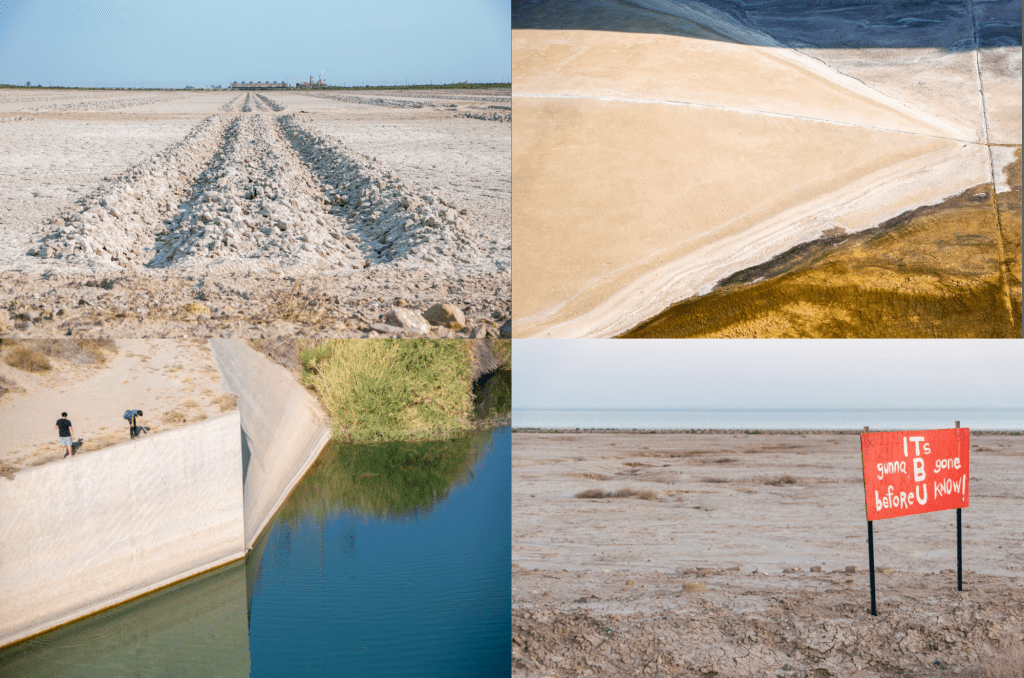
Selected image from “Salton Sea – Digital Visual Ethnography”. Digital photo, 2025.
That’s fascinating, I’m reminded of research into tree rings or ice cores, and how those can give insight into historic atmospheric chemical make-up. This feels like an exciting extension to that work of linking a specific moment in time to a chemical fingerprint. As you’ve worked photography into your practice, have you bumped up against any limitations to its ability to capture the nuanced EV ecosystem in the Salton Sea?
Of course. The medium is limited to what I find interesting as an individual, I can only see the Salton Sea with my eyes, my gaze. There’s potential to break that limitation, of course. I could distribute cameras to community members, invite them to document anything which interests them, then have them curate a community exhibition of what’s important to them. Photography also flattens so much, there’s a flattening effect to the medium, which creates a one-sided relationship to the viewer. Photography lacks the tactileness, the 3D-ness, you get from creating a more physical object. Objects with more physicality, things you hold, can touch you. When you hold an object, they possess you, too, in a way. There’s an immediate co-constitution between a viewer and an object which isn’t possible with photographs.
This coming summer I’ll be working with some Cahuilla potters, who’ll teach me about their process. I’ll learn about harvesting wild clay, how they process it, how to make traditional vessel forms, and traditional firing methods in pits using Joshua Tree bark. It’s going to offer fascinating insight into how humans organize around resource management in this region. Rather than a Promethean approach of domination, it’s a form of stewardship and care for this landscape with its own naturalized lifecycle, deeply ingrained in the community.
I think that objects have a “life,” an active sort of agency, whereas to me photographs speaks intrinsically to the past. Every moment after an image is captured, it represents something gone. Photos rest in archives, whereas physical objects live active lives in-community. It makes total sense that you’d turn towards new objects to respond to this site, and potters feels especially well suited to your interest in creating something accessible to those communities of concern.
Yeah, undergirding a lot of my work is the desire to imagine an anti-state, anti-colonial archive, something rooted in community. Archives themselves are such a colonial construct, deeply rooted in histories of extraction. Instead, many of the images I’ve collected are of the ways in which artists have subverted dominant narratives and the ways which toxicity manifests itself – I’ve tried to assemble a collection of images which the EV industry would never foreground. I mean, the entire area has been dubbed “Lithium Valley,” this whole landscape has been commodified, its economy has been organized around a commodity. Prior to this name it was called “Imperial Valley” because of historic agriculture in the area. There’s this constant repackaging of this landscape from dominant players which I’m interested in disrupting– the goal is an archive which isn’t rooted in state logics, created instead collectively in community with the frontline, marginalized communities I’m working with.
. . . .
The Future Was Already Buried Here: Making and Unmaking Futures in California’s Lithium Valley is on view at 111 Thayer Street, Providence, RI through August 28th, 2026. For readers interested in learning more about his exhibition, I encourage you to watch Rabbani’s April 21 artist talk which accompanied the exhibition’s opening reception.
Interview conducted on May 1, 2026 by Charlie Usadi. Original film and digital photographs courtesy of the artist. Photos of the Art At Watson opening talk and reception by Azurae Cruz, used with permission by Brown’s Watson School of International and Public Affairs “Art at Watson” initiative.


Leave a Reply